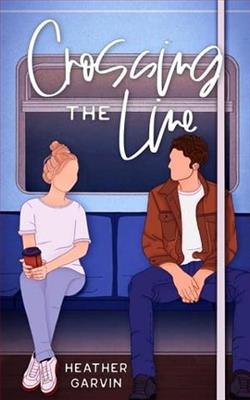
Crossing the Line by Heather Garvin is a notable entry into the contemporary young adult genre, presenting not only a tale of personal growth and discovery but also delving deep into the dynamics of familial relationships, mental health, and the ever-complex teenage navigation of love and friendship. This novel manages to strike a resonating chord through its simple yet powerful narrative that explores the boundaries one is willing to cross for the sake of loyalty and personal integrity.
The protagonist, Jenna Hamilton, is crafted with a depth that is both compelling and relatable. Jenna's journey begins at a crucial pivot in her life, depicting her struggles with a family crisis that threatens to unravel the very fabric of her existence. Garvin adeptly captures the tumultuous sea of emotions Jenna wades through as she balances the cusp of adulthood with the shackles of a past that continuously claws at her present. The character’s evolution is penned with a genuine authenticity that readers, particularly those in their late teens, will find both impactful and reflective of their own experiences.
Garvin's writing shines in her ability to craft relationships with nuance and complexity. The familial interactions, particularly between Jenna and her mother, are portrayed with an aching realism that underscores much of the emotional landscape of the novel. This relationship, fraught with tension yet bound by an undercurrent of unconditional love, forms the backbone of the narrative, influencing many of Jenna's decisions and her outlook on life. Through these interactions, Garvin explores themes such as forgiveness, understanding, and the often painful journey towards reconciliation.
Moreover, the romantic elements of Crossing the Line do not overshadow but rather enrich the story. Jenna's relationship with Erik, a charming yet enigmatic character, unfolds beautifully, punctuated by moments of sweetness and the inevitable misunderstandings that come with young love. Their relationship serves both as a subplot and as a catalyst for Jenna’s self-discovery, propelling her to confront her fears and insecurities. Garvin delicately handles their growth as individuals and as a couple, steering clear of typical YA clichés, which lends credibility and freshness to their romance.
One of the standout features of Garvin’s narrative is her subtle yet poignant handling of mental health issues. The book doesn’t shy away from confronting the stigma associated with mental illness, particularly within the context of adolescence. Jenna’s internal conflicts and her reactions to the mental health challenges faced by her loved ones are portrayed with sensitivity and a deep-seated empathy that resonates throughout the book. This careful depiction helps to elevate the story from mere entertainment to a meaningful dialogue about important social topics.
The pacing of Crossing the Line is another commendable aspect. Garvin ensures that the flow of the narrative is both engaging and reflective, allowing readers time to comprehend the gravity of the situations presented, without lingering too long on any particular issue. The balance between action-driven scenes and introspective moments is well maintained, ensuring a steady yet poignant read.
The novel also features a well-rounded cast of supporting characters, each adding layers to the primary narrative and providing broader social and emotional perspectives. From Jenna’s spirited best friend who offers comic relief to the quieter, more introspective characters who challenge Jenna's way of thinking, Garvin uses these interactions to showcase a spectrum of teen life and the varied responses to the challenges it presents.
However, no book is without its slight imperfections. At times, the dialogue between characters can feel slightly forced, lacking in the natural flow that generally characterizes teenager interactions. Similarly, there are moments where the narrative seems to veer a bit too close to predictability, though these are few and are mostly overshadowed by the novel’s many strengths.
In conclusion, Crossing the Line by Heather Garvin is a heartfelt exploration of the trials and tribulations of coming-of-age. Its strength lies in its honest portrayal of complicated human emotions and relationships. It challenges readers to consider the lines they themselves would cross in the quest for truth, love, and self-identity. This novel is a recommended read for anyone who enjoys young adult fiction that doesn’t just entertain but also invites introspection and discussion.



