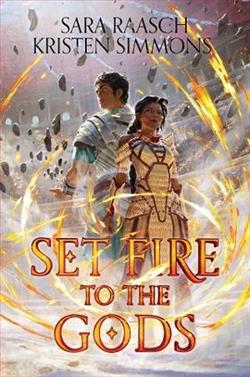
Sara Raasch's Set Fire to the Gods is an enthralling fantasy novel that weaves together themes of revenge, power, and rebellion within a richly imagined world. The story is set against the backdrop of a society where gods wield immense power and humans are often caught in the crossfire of their divine conflicts. Raasch, known for her ability to craft intricate worlds and compelling characters, does not disappoint in this latest offering.
The novel introduces us to two protagonists, Ash and Madoc, whose lives are shaped by the oppressive rule of their respective gods. Ash, a descendant of gladiators, is driven by a deep-seated desire for vengeance after her mother's death in the arena. Her character is a fascinating exploration of grief and determination, as she channels her pain into a mission to overthrow the fire god who has brought suffering to her people. Ash's journey is one of empowerment, as she learns to harness her own strength and rally others to her cause.
In contrast, Madoc's story is one of survival and secrecy. Raised in poverty, he fights on the streets to support his family, all the while concealing a dangerous secret: his elemental powers are unlike any seen in generations. Madoc's character is a study in resilience and moral complexity. He is torn between his loyalty to his family and the potential to use his unique abilities for a greater cause. Raasch skillfully portrays his internal struggle, making him a relatable and sympathetic character.
The intersection of Ash and Madoc's paths is where the novel truly shines. Their dynamic is charged with tension and intrigue, as Ash sees in Madoc the potential to turn the tide in her rebellion. However, Madoc's reluctance to endanger his family adds layers of complexity to their relationship. The chemistry between them is palpable, and Raasch deftly balances their individual arcs with the development of their partnership.
One of the standout elements of Set Fire to the Gods is its exploration of power dynamics and the consequences of divine intervention in human affairs. The gods in Raasch's world are capricious and often indifferent to the suffering they cause. This theme is reminiscent of other fantasy works, such as Rick Riordan's Percy Jackson series, where the whims of gods have profound impacts on mortal lives. However, Raasch adds her own unique twist by focusing on the gladiator games as a means of resolving divine conflicts, highlighting the brutality and spectacle of such events.
The novel also delves into the theme of rebellion and the cost of fighting for change. Ash's quest for vengeance is not without its moral ambiguities, and Raasch does not shy away from exploring the darker aspects of her character's motivations. This nuanced portrayal of rebellion is reminiscent of Leigh Bardugo's Six of Crows, where characters grapple with the ethical implications of their actions in pursuit of a greater good.
Raasch's world-building is another highlight of the novel. The setting is vividly described, with each element of the world feeling meticulously crafted. The gladiator arenas, in particular, are brought to life with a visceral intensity that immerses the reader in the action. The elemental magic system is intriguing and adds depth to the story, as characters navigate the complexities of their powers and the limitations imposed by the gods.
Overall, Set Fire to the Gods is a compelling addition to the fantasy genre. Raasch's ability to blend action, romance, and political intrigue results in a story that is both entertaining and thought-provoking. The novel's exploration of themes such as power, rebellion, and the human cost of divine conflicts resonates with readers, offering a fresh perspective on familiar fantasy tropes.
For fans of character-driven fantasy with a strong emphasis on world-building and thematic depth, Set Fire to the Gods is a must-read. Raasch's skillful storytelling and complex characters ensure that this novel will leave a lasting impact, inviting readers to ponder the nature of power and the lengths one will go to achieve justice.



